Oculomics: The Eye as a Window into Whole-Body Health
Written by Yari Mitchell, Co-Founder and Co-CEO of LaunchLab Partners
We’ve all heard the saying that the eye is the “window to the soul,” but emerging research suggests it may also be a powerful window into systemic health. At the Ophthalmology Innovation Source meeting in San Diego, I was introduced to a rapidly developing field called oculomics, and it has the potential to fundamentally change how we diagnose and monitor disease.
A recent peer-reviewed article, Oculomics: Current Concepts and Evidence, describes how advancements in imaging and machine learning are enabling us to detect systemic disease by analyzing subtle biomarkers in the eye. The concept is simple but groundbreaking: the eye contains microvasculature and neural tissue that mirror what’s happening throughout the body. With today’s high-resolution tools (like fundus photography, OCT, OCT-A, and emerging tear-film analytics) researchers can now identify patterns that signal risk far beyond the eye itself.
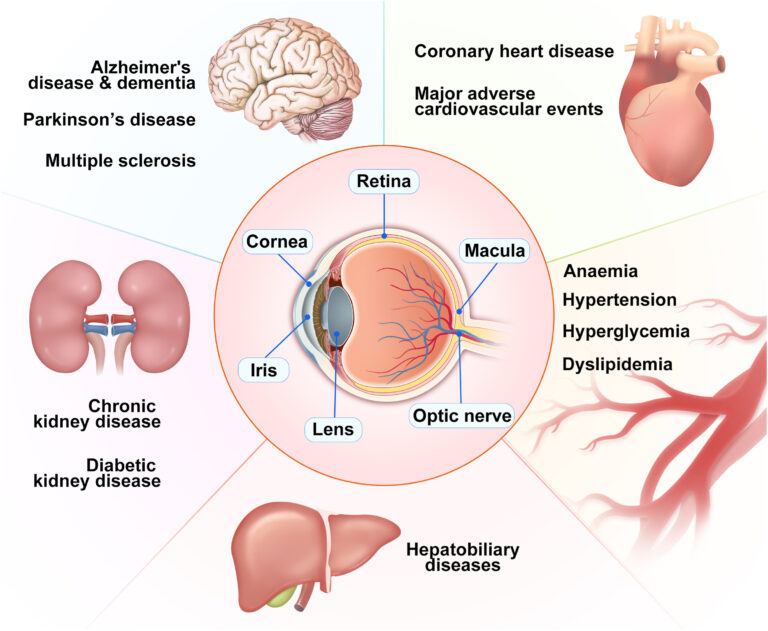
For example, changes in retinal veins such as dilation or tortuosity can indicate cardiovascular disease. Retinal nerve fiber layer thinning and microvascular irregularities may serve as early markers for neurodegenerative conditions like Alzheimer’s or Parkinson’s disease. And while we’ve long known the retina reflects diabetic changes, new AI models can identify risk even before traditional clinical signs appear.
Systemic diseases and their ocular manifestations: how conditions affecting the brain, heart, kidneys, liver, and vascular system can be reflected in the retina and other structures of the eye. Image courtesy of “Oculomics: Current concepts and evidence” featured on ScienceDirect.com.
Tear-film biomarkers are also becoming a promising frontier. InnSight Technologies, for instance, is developing a tear-film analyzer that begins with identifying markers for ocular surface disease but may ultimately provide insights into systemic conditions such as diabetes, cardiovascular disease, and inflammatory disorders. The idea that a simple, non-invasive tear sample could offer a broader picture of overall health is incredibly compelling.
What makes oculomics especially exciting is its potential for early intervention. Detecting disease processes sooner gives clinicians the chance to intervene earlier, often leading to better outcomes and avoiding catastrophic events.
Of course, challenges remain: standardizing imaging data, validating AI models, and integrating ocular biomarkers into clinical workflows. But the momentum is real, and the implications for patient care, biotech innovation, and ophthalmology are significant.
We may be entering a new era where a routine eye exam becomes one of the most powerful tools we have for detecting systemic disease. Oculomics isn’t just the future of eye care—it’s the future of early diagnosis and whole-body health.
Oculomics: The Eye as a Window into Whole-Body Health
Co-Founder & Co-CEO, Marketing & Brand Experience
Jenna is passionate about advancing patient access to advanced healthcare innovations and leveraging her significant experience in marketing and brand development in service of that passion. With over 15 years of medical device marketing experience in ophthalmology and bariatrics, she specializes in global commercialization, product launches, clinical trial patient recruitment, branding, messaging, internet marketing strategies, and developing comprehensive marketing assets to support growth initiatives.
Prior to co-founding LaunchLab Partners, Jenna led Global Marketing for AcuFocus, a privately held medical device company based in Southern California. At AcuFocus she spearheaded the company’s global marketing strategy and led execution of the company’s brand and market development initiatives, launching first-of-their-kind products.
Jenna holds a B.A. in Marketing from San Diego State University and a certificate in Advanced Digital Marketing Growth strategies from the Wharton School of the University of Pennsylvania. She also serves as a digital ambassador for the Ophthalmic World Leaders (OWL) and is a member of Women in Ophthalmology.
A self-identified Peloton enthusiast (#BeKindGoFarr), Jenna is committed to action, growth, community, and achievement.